 English
 Español
  Português
  русский
  Français
  日本語
日本語  Deutsch
  tiếng Việt
  Italiano
  Nederlands
  ภาษาไทย
  Polski
  한국어
한국어  Svenska
  magyar
  Malay
Malay  বাংলা ভাষার
  Dansk
Dansk  Suomi
Suomi  हिन्दी
  Pilipino
  Türkçe
  Gaeilge
  العربية
  Indonesia
  Norsk
Norsk  تمل
تمل  český
český  ελληνικά
  український
  Javanese
  فارسی
فارسی  தமிழ்
தமிழ்  తెలుగు
  नेपाली
  Burmese
  български
  ລາວ
ລາວ  Latine
  Қазақша
  Euskal
  Azərbaycan
  Slovenský jazyk
  Македонски
  Lietuvos
  Eesti Keel
  Română
  Slovenski
  मराठी
मराठी  Srpski језик

Call Us
+86-13780696467
Email Us
sales@qdcomrise.com

How Does a PVC Pipe Making Machine Improve Industrial Pipe Production Efficiency?
A PVC Pipe Making Machine plays a crucial role in modern plastic pipe manufacturing by enabling high-efficiency, standardized, and cost-effective production of PVC pipes for construction, agriculture, drainage, and industrial applications. As global demand for durable and corrosion-resistant piping systems grows, manufacturers increasingly rely on advanced PVC pipe extrusion technology to stay competitive.
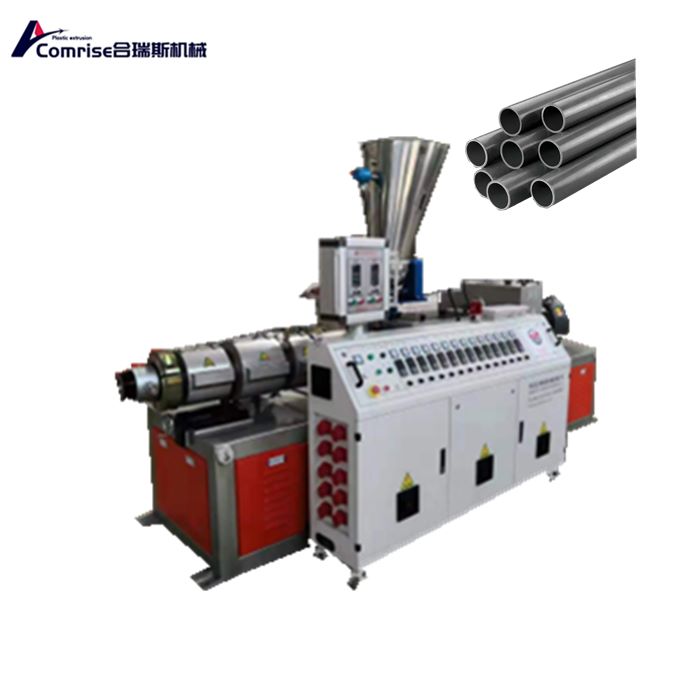
Article Abstract
This article provides a comprehensive overview of the PVC Pipe Making Machine, explaining how it works, why it is essential for industrial production, and which factors matter most when selecting the right equipment. You will also learn about technical specifications, application scenarios, operational advantages, and frequently asked questions. The insights shared here are based on industry practices and supported by references from authoritative plastic machinery and polymer organizations.
Table of Contents
- What Is the Overall Structure of This Guide?
- What Is a PVC Pipe Making Machine?
- How Does a PVC Pipe Making Machine Work?
- What Are the Key Components of a PVC Pipe Production Line?
- Why Are PVC Pipe Making Machines So Important?
- Which Industries Use PVC Pipes Most?
- What Technical Specifications Matter Most?
- How Does PVC Pipe Manufacturing Compare to Other Materials?
- How Should You Choose the Right PVC Pipe Making Machine?
- Frequently Asked Questions
- References
What Is the Overall Structure of This Guide?
This guide follows a logical flow from basic concepts to practical decision-making. It starts by defining what a PVC Pipe Making Machine is, then explains the working process, core components, technical specifications, and real-world applications. Finally, it answers common buyer and operator questions in a detailed FAQ section.
What Is a PVC Pipe Making Machine?
A PVC Pipe Making Machine is an industrial extrusion system designed to melt, shape, cool, and cut polyvinyl chloride (PVC) material into pipes of specific diameters and wall thicknesses. These machines are widely used in large-scale plastic pipe manufacturing plants.
Manufacturers such as Qingdao Comrise Machinery Co., Ltd. specialize in designing complete PVC pipe extrusion lines that integrate automation, precision control, and energy efficiency to meet international standards.
How Does a PVC Pipe Making Machine Work?
The working process of a PVC Pipe Making Machine follows a continuous extrusion principle. Each stage is carefully synchronized to ensure uniform pipe quality.
- Material Feeding: PVC resin, stabilizers, lubricants, and additives are mixed and fed into the extruder.
- Plasticizing: The screw inside the extruder melts and homogenizes the material.
- Extrusion Molding: The molten PVC is pushed through a pipe die to form the desired shape.
- Vacuum Calibration: The pipe diameter is stabilized using a vacuum tank.
- Cooling: Water spray or immersion cooling solidifies the pipe.
- Haul-Off: The pipe is pulled at a constant speed.
- Cutting: Pipes are cut to preset lengths.
What Are the Key Components of a PVC Pipe Production Line?
| Component | Function |
|---|---|
| Conical Twin-Screw Extruder | Melts and conveys PVC material efficiently |
| Extrusion Die | Shapes the molten PVC into pipe form |
| Vacuum Calibration Tank | Ensures accurate pipe diameter |
| Cooling Tank | Rapidly cools and solidifies pipes |
| Haul-Off Unit | Maintains stable pulling speed |
| Cutting Machine | Cuts pipes to required length |
Complete systems provided by Qingdao Comrise Machinery Co., Ltd. are engineered for long-term stability and minimal maintenance.
Why Are PVC Pipe Making Machines So Important?
- High production efficiency with continuous output
- Consistent pipe dimensions and surface finish
- Lower material waste compared to traditional methods
- Automation reduces labor costs
- Supports large-diameter and multi-layer pipe production
Which Industries Use PVC Pipes Most?
PVC pipes produced by modern extrusion machines are used across multiple industries:
- Building water supply and drainage systems
- Agricultural irrigation
- Electrical conduit protection
- Chemical fluid transportation
- Municipal infrastructure projects
What Technical Specifications Matter Most?
| Parameter | Typical Range |
|---|---|
| Pipe Diameter | 16 mm – 800 mm |
| Extrusion Output | 150 – 1000 kg/h |
| Main Motor Power | 22 – 110 kW |
| Control System | PLC + Touch Screen |
| Applicable Standards | ISO, ASTM, DIN |
How Does PVC Pipe Manufacturing Compare to Other Materials?
Compared to metal or concrete pipes, PVC pipes offer advantages such as corrosion resistance, lighter weight, easier installation, and lower lifecycle costs. This makes PVC Pipe Making Machines a preferred investment for modern pipe manufacturers.
How Should You Choose the Right PVC Pipe Making Machine?
When selecting a machine, consider production capacity, pipe size range, automation level, energy consumption, and supplier experience. Working with established manufacturers like Qingdao Comrise Machinery Co., Ltd. ensures reliable equipment and professional after-sales support.
Frequently Asked Questions
Q: What materials can a PVC Pipe Making Machine process?
A: It primarily processes PVC resin, including UPVC, CPVC, and modified PVC formulations for different applications.
Q: How long does a PVC pipe extrusion line last?
A: With proper maintenance, high-quality machines can operate reliably for more than 10–15 years.
Q: Is automation important in PVC pipe production?
A: Yes, automation improves consistency, reduces labor dependency, and minimizes human error.
Q: Can one machine produce different pipe diameters?
A: Yes, by changing extrusion dies and calibration units, multiple pipe sizes can be produced.
Q: Why choose Qingdao Comrise Machinery Co., Ltd.?
A: The company offers customized solutions, stable equipment quality, and comprehensive technical support.
References
- Plastics Industry Association – PVC Processing Guidelines
- European Plastics Converters (EuPC) Technical Reports
- ISO Standards for Plastic Piping Systems
Send Inquiry



X
We use cookies to offer you a better browsing experience, analyze site traffic and personalize content. By using this site, you agree to our use of cookies.
Privacy Policy
News
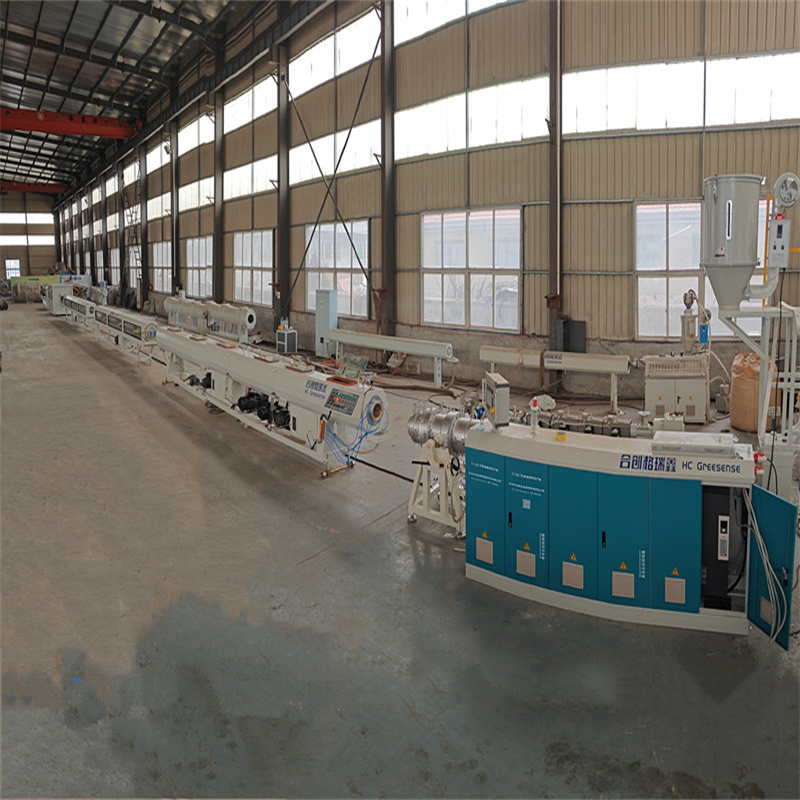 50-250mm High speed hdpe pipe machine sign contract with European customer2024/04/15
Comrise machinery specialized on high speed HDPE pipe machine manufacture and supply. The custom made HDPE pipe machine can make pipe from minimum 16mm upto 1600mm diameter. With fast delivery time for 30 days one pe pipe production line, and good after sale service, they can send experienced engine......
 Anhui customer ordered single-layer MPP power pipe machine production line on Apr.1th, 2024 year, pipe diameter 75-250mm.2024/04/07
The comrise high quality MPP power pipe machine has a 75/38 high-efficiency single-screw extruder, a 160kw motor, an 800G drying feeder, a machine head die, a core die, a sizing sleeve, one 9-meter vacuum water tank, and two 9-meter spray water tanks. It consists of a four-track tractor, a chipless ......